Layered Reward Pathways: How Digital Gaming Sites Build Player Commitment Over Multiple Sessions
Written by Petra Müller · Aug 22, 2026
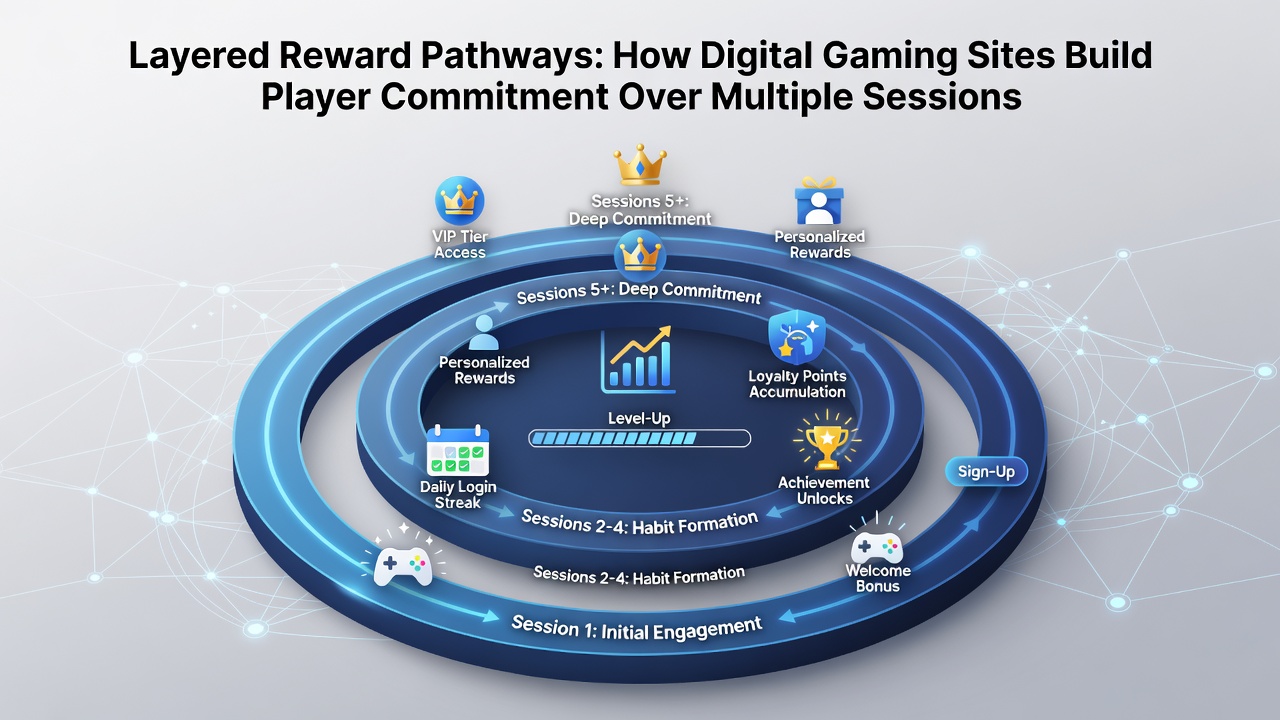
Layered Reward Pathways: How Digital Gaming Sites Build Player Commitment Over Multiple Sessions
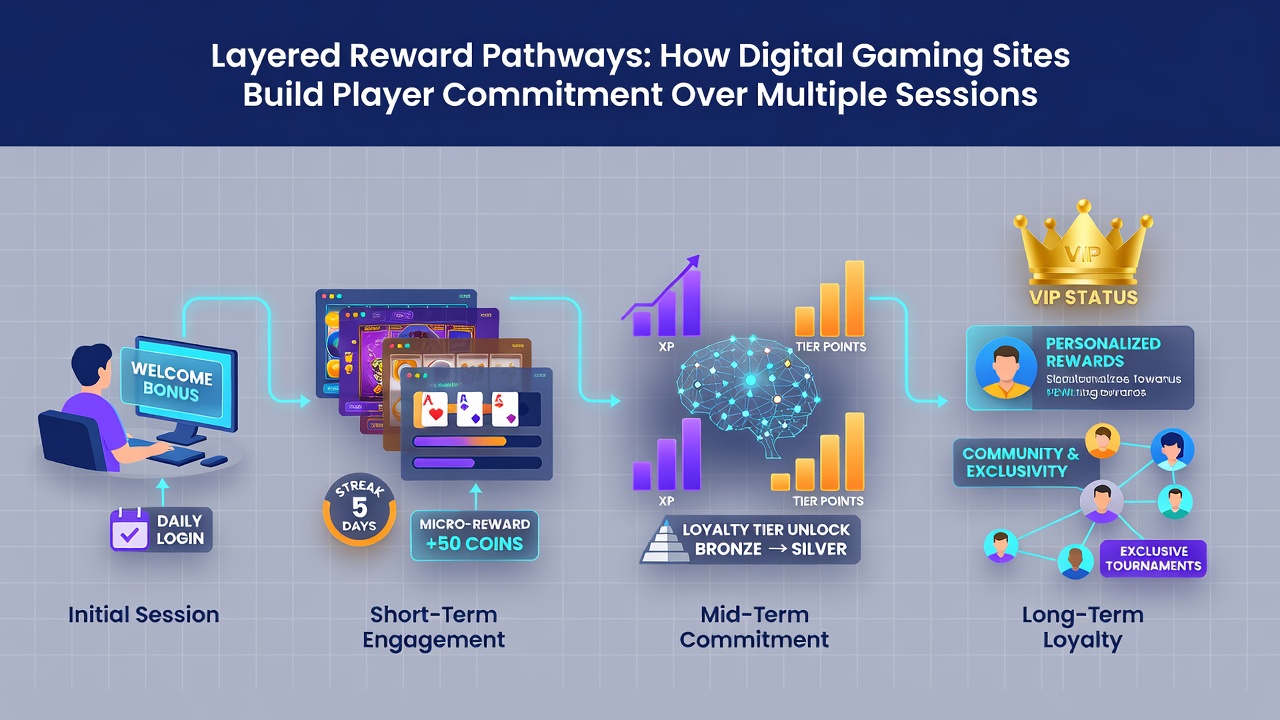
Digital gaming sites employ layered reward pathways that distribute incentives across multiple sessions to sustain player engagement. These systems combine immediate feedback mechanisms with longer-term progression elements, creating structures where short-term achievements connect to extended commitment goals. Research from academic institutions shows that such designs align with established patterns in behavioral reinforcement, where rewards arrive at varying intervals and intensities. Operators structure these pathways in tiers that activate sequentially. Initial layers often include session-start bonuses and small point accumulations, while deeper layers unlock through repeated participation. Data indicates that players who reach secondary tiers demonstrate higher return rates compared to those who engage only with entry-level rewards.Mechanics of Multi-Session Reward Accumulation
Platforms track activity through accounts that log session duration, frequency, and specific actions. Rewards build cumulatively, with each completed session contributing to a shared pool that feeds higher tiers. One study from a North American research center found that daily login streaks combined with weekly milestones increase the likelihood of continued play by measurable percentages.
Points systems convert gameplay metrics into redeemable value, and these points often carry over between sessions without reset. Additional layers introduce time-limited challenges that reset on schedules, encouraging players to return at specific intervals. Operators adjust reward density based on aggregate user data collected over months or years.
Integration of Psychological Reinforcement Principles
Layered pathways draw from variable ratio and interval schedules documented in psychological literature. Immediate small rewards maintain attention within a session, whereas larger milestones tied to cumulative play create anticipation across days or weeks. Figures from industry analyses reveal that sites incorporating both types of scheduling retain participants longer than those relying on single reward types.
Progress bars and visual indicators display advancement toward the next layer, providing constant reference points. These displays update in real time, linking current actions to future outcomes. Researchers note that visible progression correlates with extended session lengths and higher return frequency in observational datasets.
Regional Regulatory Contexts and Data Trends
Regulatory frameworks in various jurisdictions influence how operators present and structure rewards. As of August 2026, reports from the Canadian Centre on Substance Use and Addiction highlight the prevalence of tiered loyalty programs across licensed platforms operating in multiple provinces. These programs must comply with transparency requirements regarding odds and redemption values.
Australian government agencies have published statistics on player retention linked to reward layering, showing patterns where multi-session incentives correspond to increased account activity over six-month periods. Platforms adapt designs to meet local disclosure rules while maintaining the core progression structure.
Examples of Layered Implementation Across Platforms
Many sites introduce entry rewards that require minimal commitment, such as a first-session point grant. Subsequent layers demand repeated logins or specific game selections, with thresholds that increase gradually. One documented case involved a platform where players accumulated badges over ten sessions before accessing a separate reward category reserved for consistent participants.
Some designs incorporate social or competitive elements where individual progress contributes to group goals, adding another layer that spans multiple users and sessions. Data from research institutions indicates these combined systems produce distinct retention curves compared to purely individual reward tracks.
Conclusion
Layered reward pathways represent a systematic approach to building commitment through sequenced incentives distributed across sessions. Available evidence from regulatory reports and academic sources demonstrates measurable connections between these structures and patterns of repeated engagement. Operators continue to refine tier thresholds and reward timing based on ongoing data collection, adapting designs within the constraints of regional oversight.